


The plant sits in Vinh Bao, an industrial district on the flat delta land outside Haiphong. It was built in 2011, runs furnaces that turn tungsten concentrate into ferrotungsten, the alloy steelmakers feed into tool and armour grades, and for most of its life it operated far from the attention of Australian capital markets. On 20 July, Andrew Forrest paid A$189.7 million for 16.8 percent of the ASX company that owns it.
The company is EQ Resources (ASX:EQR), Australia’s only listed tungsten producer. Forrest’s private vehicle, Wonongarra Pty Ltd, bought out Oaktree Capital in one move: 862.1 million shares, largest-shareholder status, and a price that values the company at about A$1.1 billion. The stock rose 34.1 percent in a day, its best session since February 2025.
The easy reading is a Queensland mining story. The better reading runs through a furnace hall 7,000 kilometres away.
1. Beijing turned the hardest metal into an instrument
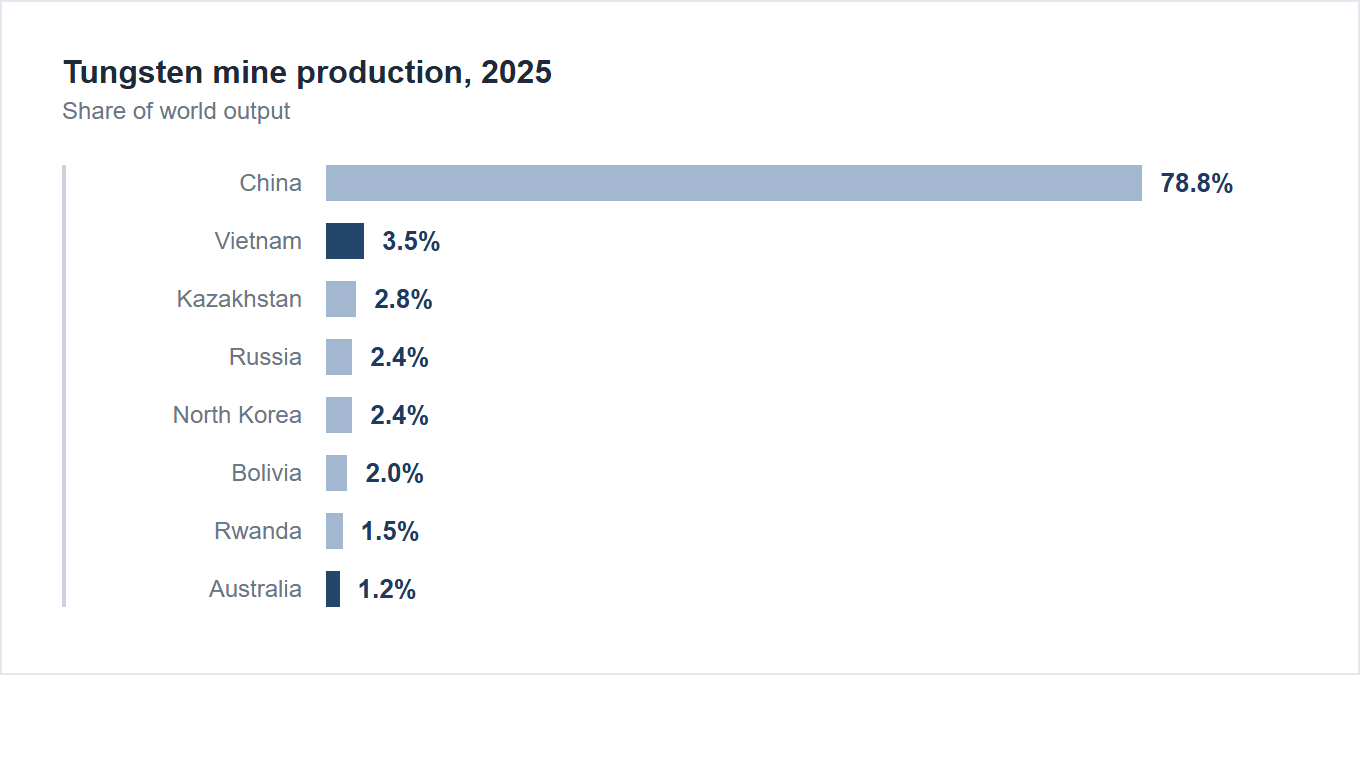
Tungsten is the hardest metal in industrial use. It goes into drill bits, armour plate, semiconductor targets and the counterweights of almost everything that flies. China controls roughly 79 percent of mine production (USGS) and most of the world’s capacity to convert concentrate into usable chemical and alloy.
Then Beijing started pulling levers. February 2025: export permit controls on tungsten. December 2025: the export licence list cut to 15 firms for two years. February 2026: a ban on dual-use sales to 20 Japanese military suppliers (Reuters). Three moves, one choke point.
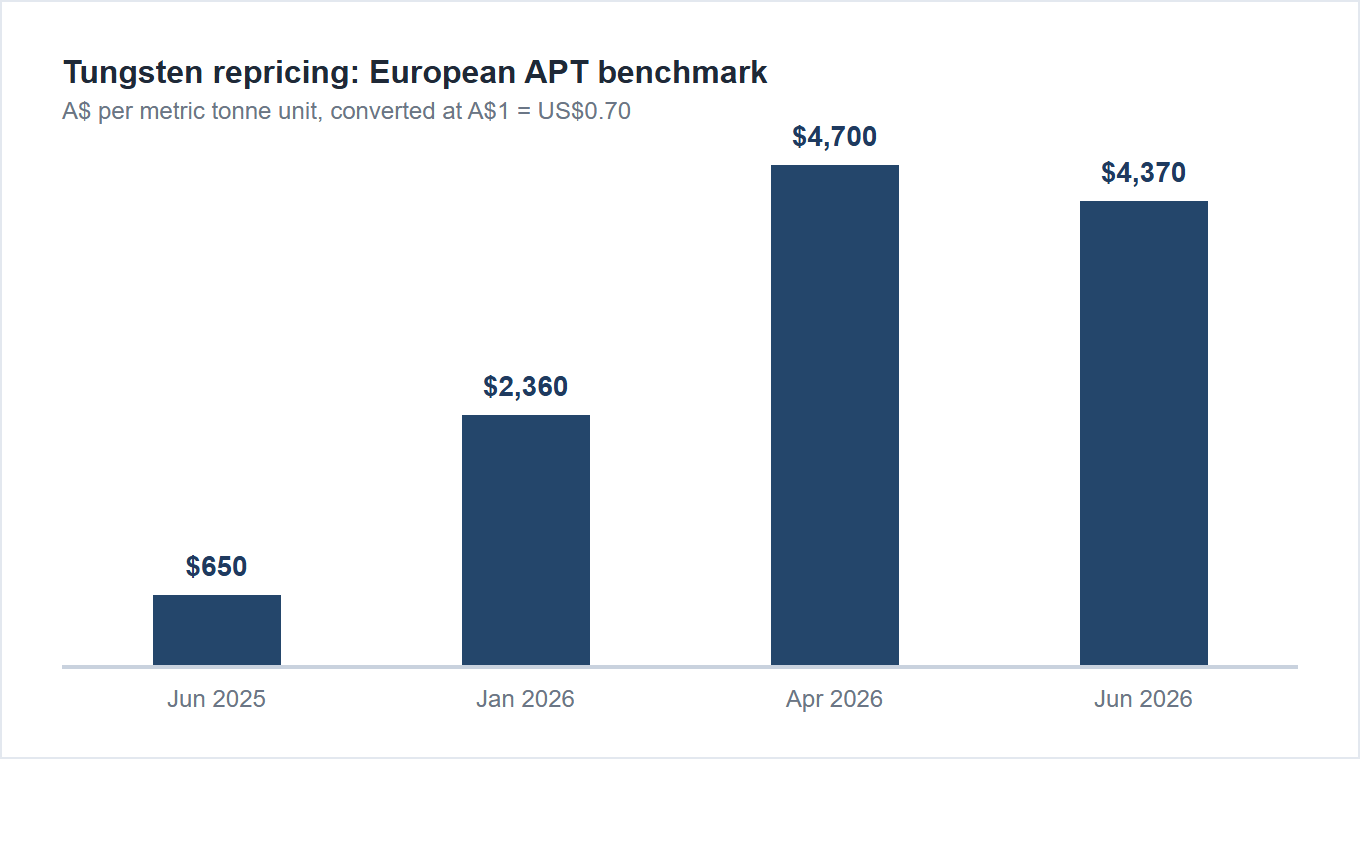
The price series records each squeeze. Ammonium paratungstate, the benchmark tungsten chemical, traded at A$620 to 680 per metric tonne unit in Rotterdam in June 2025. Twelve months later the same assessment stood at A$4,150 to 4,600, up 575 percent (Fastmarkets, converted at A$1 = US$0.70). It was still above A$4,300 the day Forrest bought in (Bloomberg)
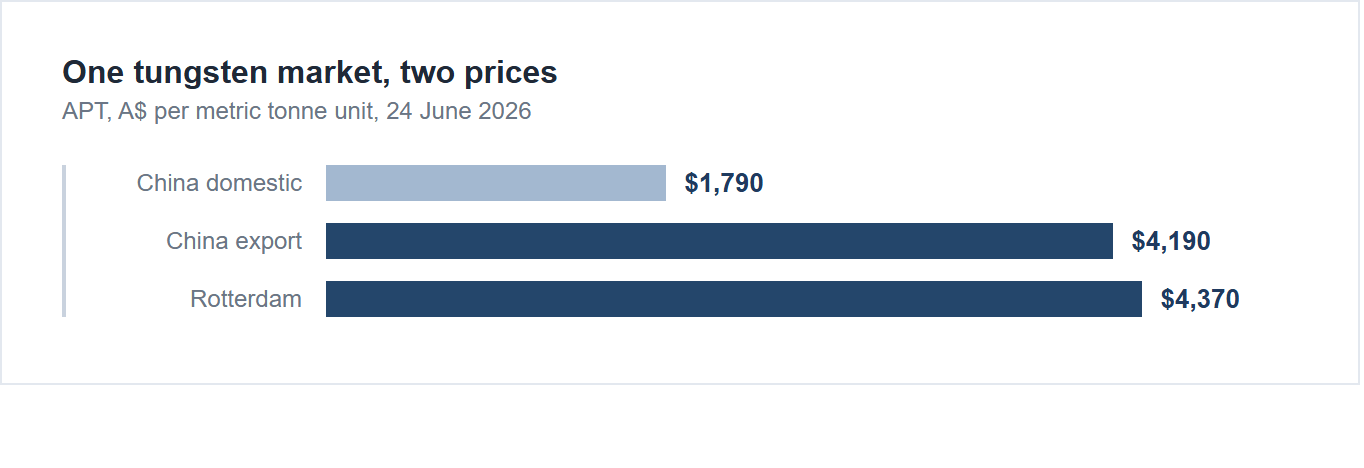
The controls did something stranger than lift the price. They split it. Chinese domestic APT traded at A$1,720 to 1,860 per mtu in late June while export and Rotterdam material cleared above A$4,150 (Fastmarkets, converted). One metal, two prices, and the spread is the measured value of owning tungsten capacity Beijing cannot license.
Demand is running the other way. Project Blue sizes the market at about 129,000 tonnes in 2025 and expects defence to grow from roughly 12 percent of consumption to 15 percent by 2027-28. Cristina Belda, senior analyst at Argus, projects defence overtaking automotive as tungsten’s largest end use by the mid-2030s. The supply answer outside China is thin. Almonty’s Sangdong mine in South Korea started up this year, the United States has no operating commercial tungsten mine (Reuters), and then there is EQ Resources.
2. The A$13.5 million plant inside the A$1.1 billion company
Rewind to November 2024. EQ Resources agreed to buy Tungsten Metals Group, owner of the Vinh Bao plant, at an enterprise value of A$13.5 million, paid in roughly 170 million shares and A$2.5 million cash. Nameplate capacity: about 4,000 tonnes of ferrotungsten a year. EQ called it the largest and most advanced ferrotungsten plant outside China. The market barely moved.
Twenty months and one Chinese licence regime later, that plant sits inside a company valued at A$1.1 billion, with its own ore to feed it. Concentrate from Mt Carbine in Queensland and Barruecopardo in Spain flows to Haiphong and comes out as alloy no Chinese export licence can touch.
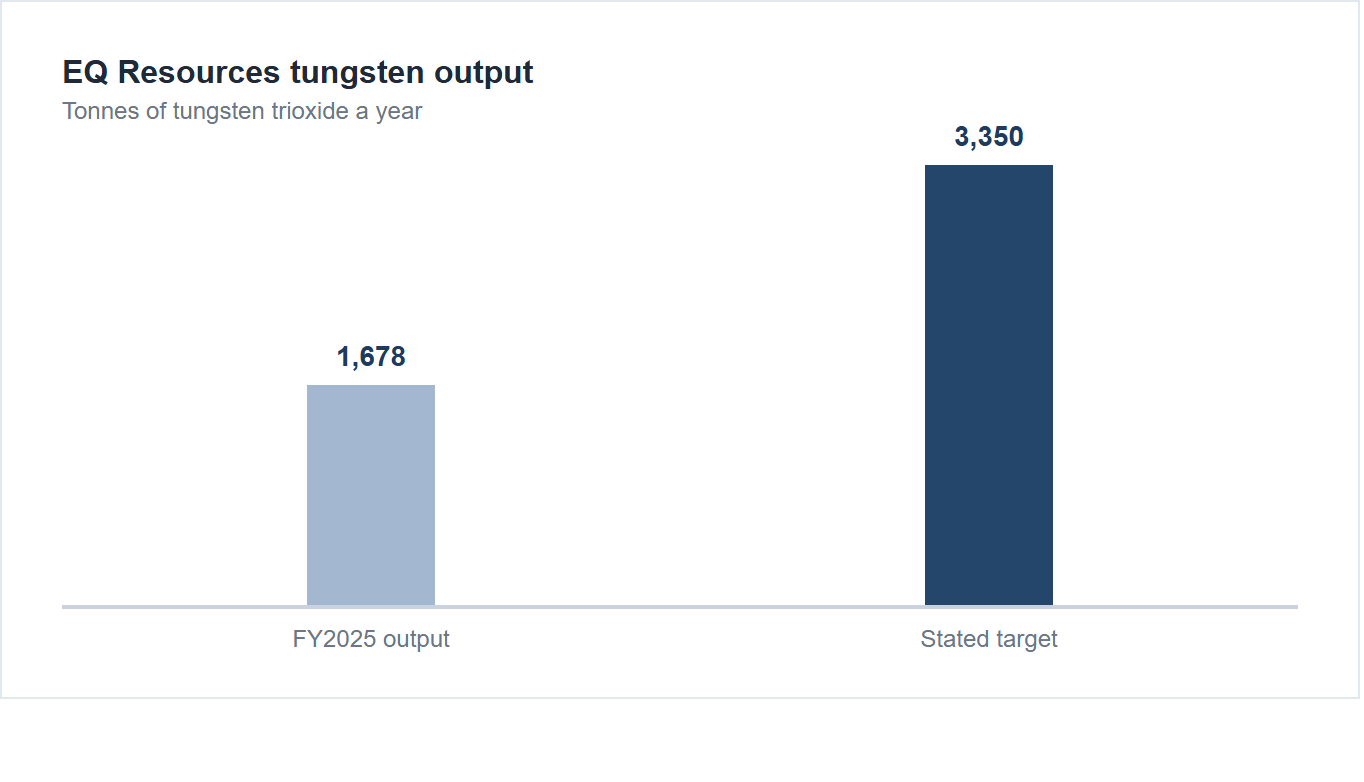
The ore side is scaling to match. EQ produced 1,678 tonnes of tungsten trioxide in FY2025, has approved a A$39 million expansion to double Mt Carbine’s crushing capacity by Q3 FY2027, and targets more than 3,350 tonnes a year (EQ Resources ASX announcements). Quarterly production is already rising into record prices, up 33 percent quarter on quarter (Small Caps, July 2026).
3. Vietnam is the hinge
Vietnam mined 3,000 tonnes of tungsten in 2025, second in the world, most of it from Masan High-Tech Materials’ Nui Phao mine (USGS). Second-largest miner, largest non-Chinese conversion plant, and a licensing regime Beijing does not control.
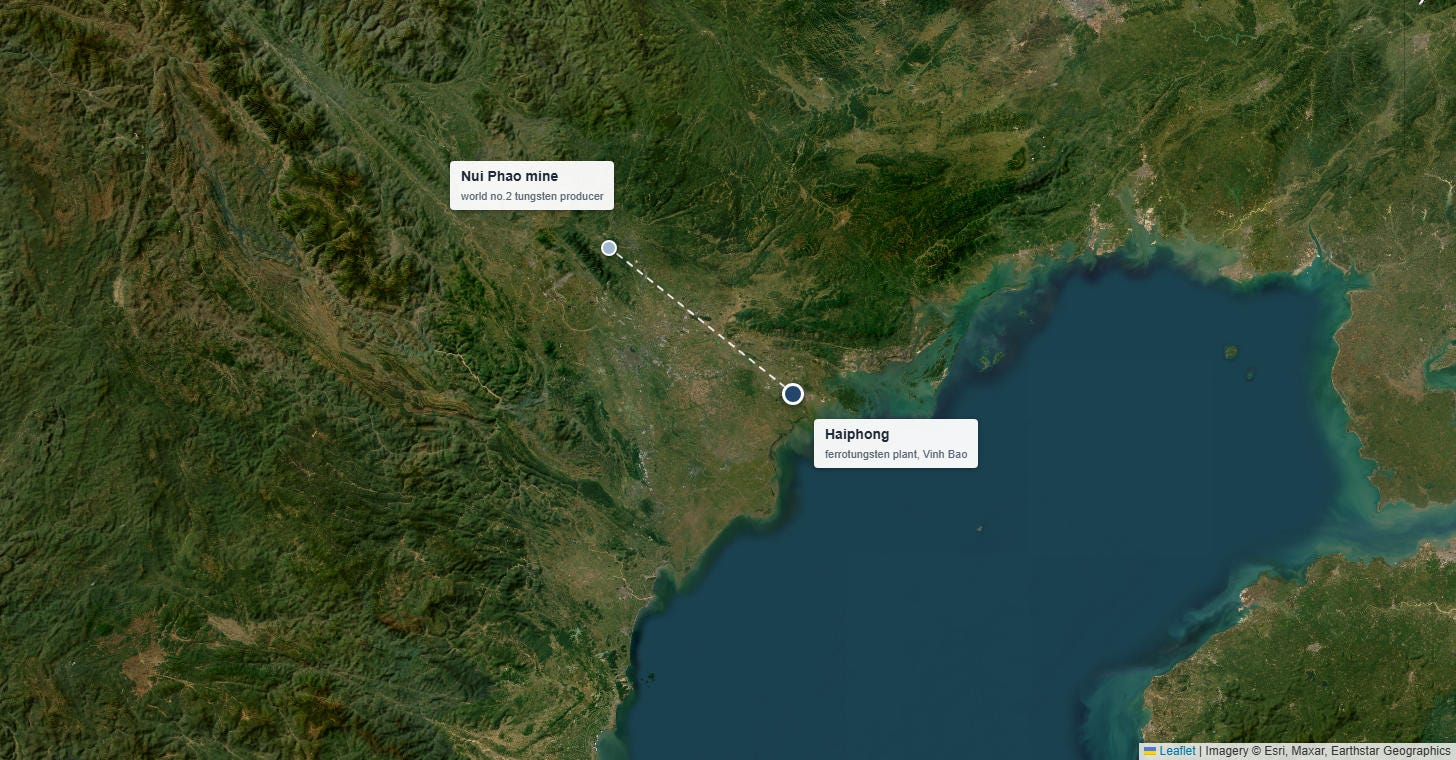
That combination is why the February 2026 ban matters here. Japanese steelmakers and toolmakers cut off from Chinese material now need ferrotungsten from somewhere else, and the somewhere else is largely one address in Haiphong.
4. Australia has the rock. Vietnam has the works.
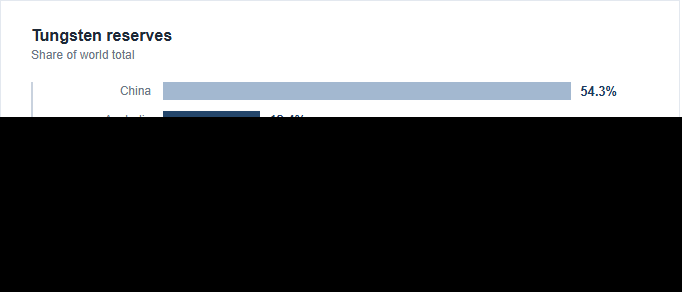
Australia holds the second-largest tungsten endowment on earth, about 12 percent of world reserves against China’s 54 percent (USGS). It converted that into barely 1 percent of world production last year. The rock without the works. Vietnam is the works. Neither position is complete alone, and EQ Resources is currently the only listed vehicle that joins them.Tungsten reserves by country, share of world total. Source: USGS Mineral Commodity Summaries 2026
That is what Forrest’s A$189.7 million bought. Not a Queensland mine story, but the one listed chain that runs Australian ore through Vietnamese furnaces in a metal China has spent eighteen months weaponising.
The tungsten trade of this cycle is not owning the metal. It is owning the conversion, and the conversion is in Vietnam.
General commentary only. Not financial product advice
👍